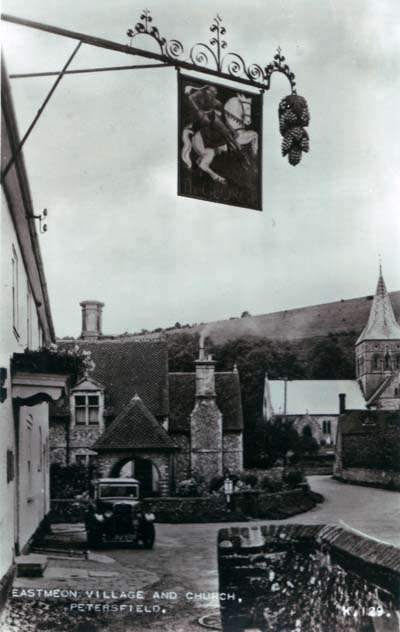
Shops, agriculture, pubs – the economy of East Meon.
A century ago, the streets of East Meon were packed with shops and tradesmen. In 2006, just before she died, Margery Lambert drew a map from her memory of the village in the 1920s. In it, she listed over twenty different shops and tradesmen working in the village. (Click here for a list of the shops and trades she identified.)
Today there are one shop and two pubs.
Outdoor work
.
The main business of East Meon was agriculture, which in turn supported trades such as two smithies and three mills.
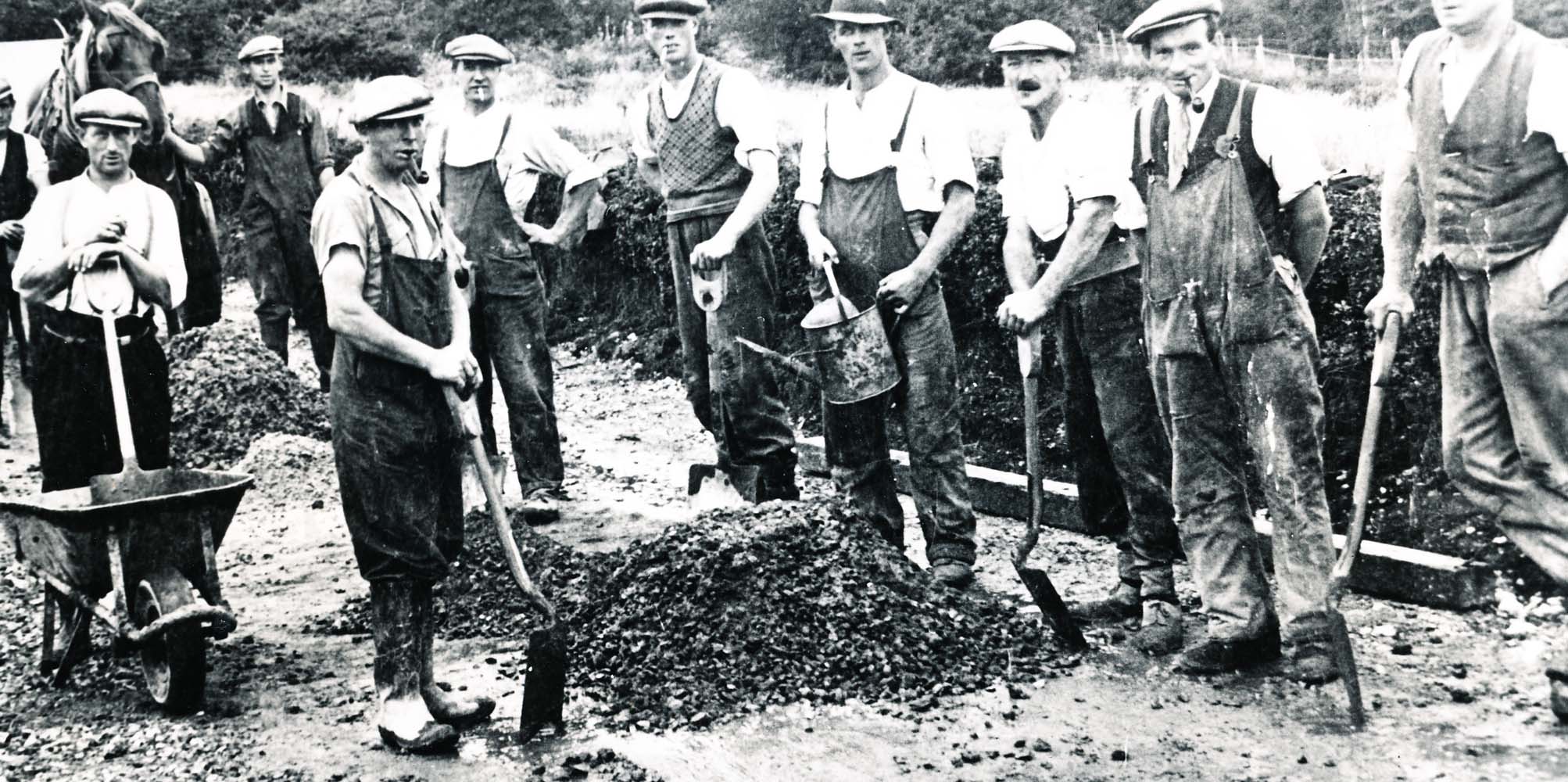
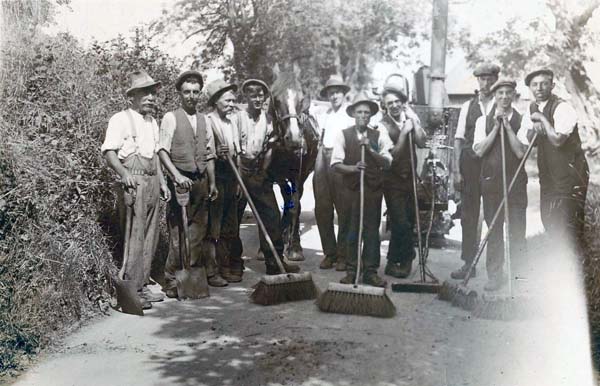
Road tar gang. Among the men, left to right, Fred Cannings, Len (Tiny) Cannings, Jack Cook, Tom Perkins, Fred Gibbs, Bruce Kille
A road crew surfacing a road with tarmac, taken around 1930. On the left, Jeremiah Christmas, featured in the People section, and to his right, Curly Searle, father of Kath Adams, also featured.
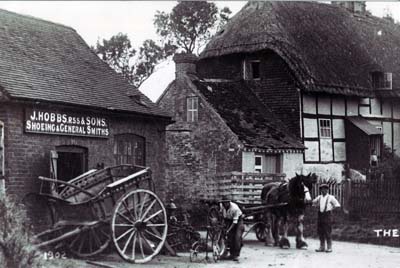
Master blacksmith Jim Hobbs working outside his forge, with Forge Cottage behind. (Freddie Standfield, village historian, lived in Forge Cottage.)
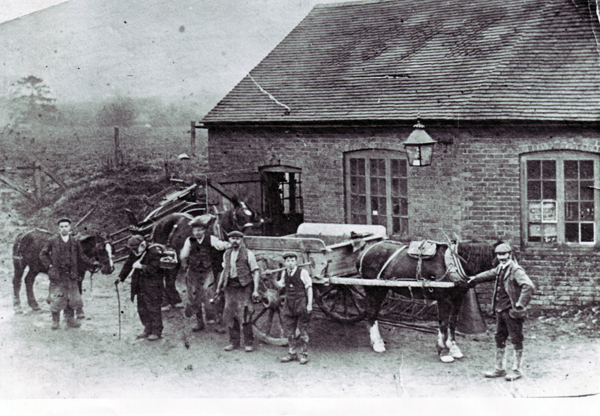
Jim Hobbs, fourth from left, with his sons Donald and Harold to his right. Employee Walter Lambert holds the pony. Jimmie Lock, retired and blind, carries a travelling blacksmith’s tool-box.
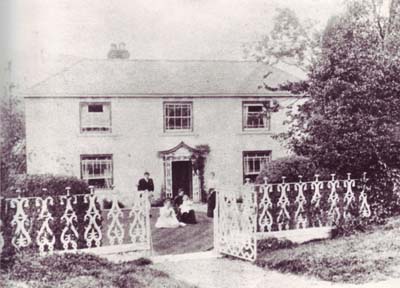
Frogmore Mill House with the family of George Silk. In 1935 George Silk was described as “farmer” only…. Frogmore no longer milled corn.
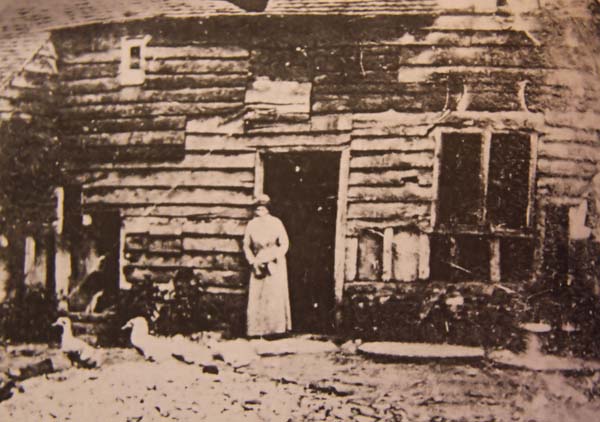
Nellie Aburrow at Drayton Mill. When Alfred James Aburrow died in 1894, his four surviving children Alfred, Stephen, Harry, and Ellen ran a wheelwright business at the mill.
South Mill Miller at work
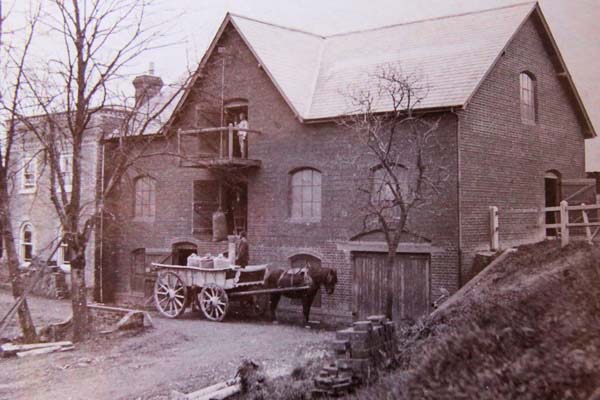
South Mill with miller and cart
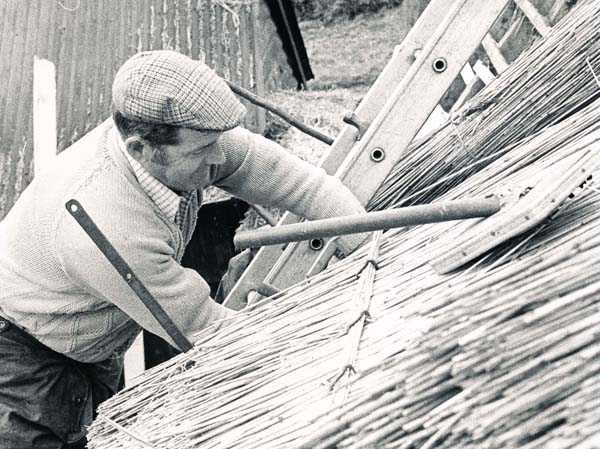
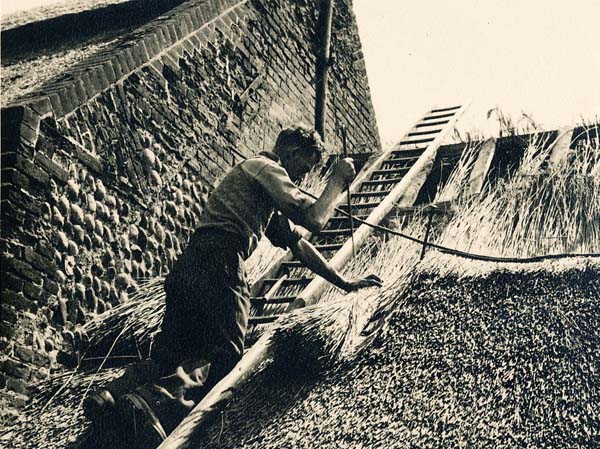
Thatcher preparing to bind
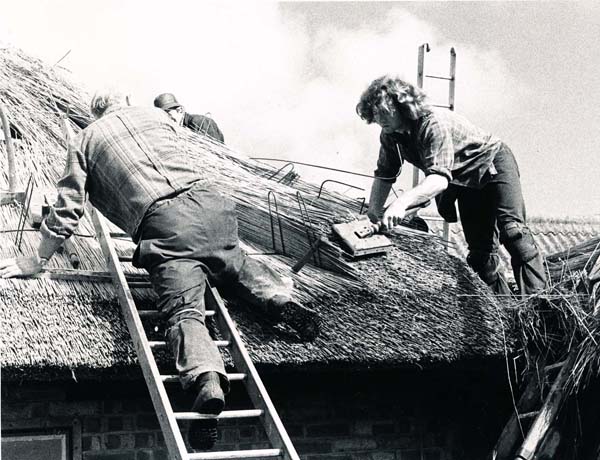
Thatchers damping reeds into position
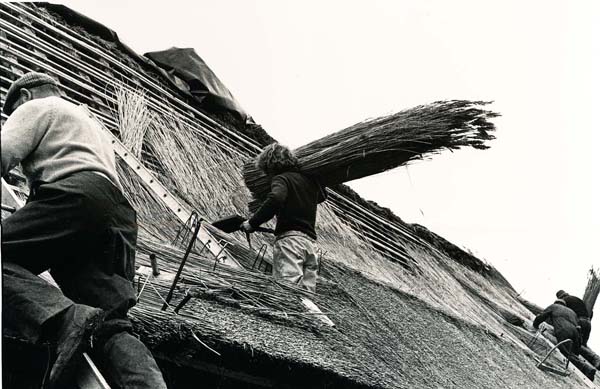
Three thatchers placing sheaves of reeds on roof
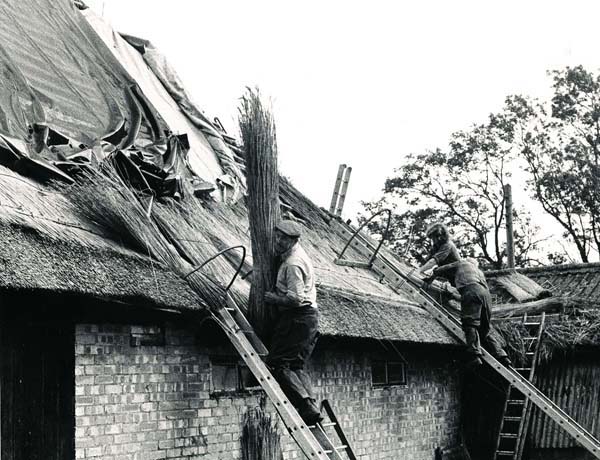
Thtachers carrying sheaves to roof. Many cottages in East Meon had thatched rooves, one reason why so many were burned down.
George & Mary Atkinson and Family. George was one of the farmers from Cumberland who came to East Meon at the beginning of the 20th century. At his feet his sons George, left, and Joseph, who went on to develop Lower Farm and eventually to buy it from Lady Peel.
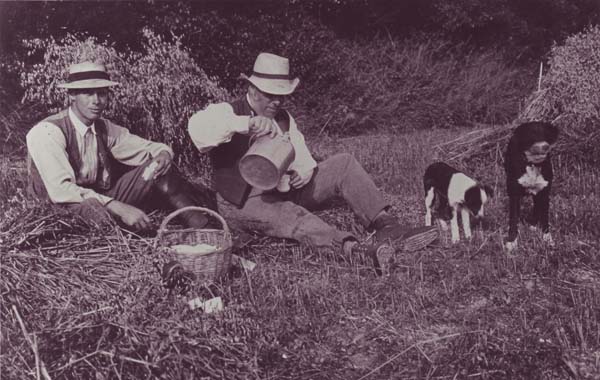
Farm workers enjoying their lunch on a sunny day
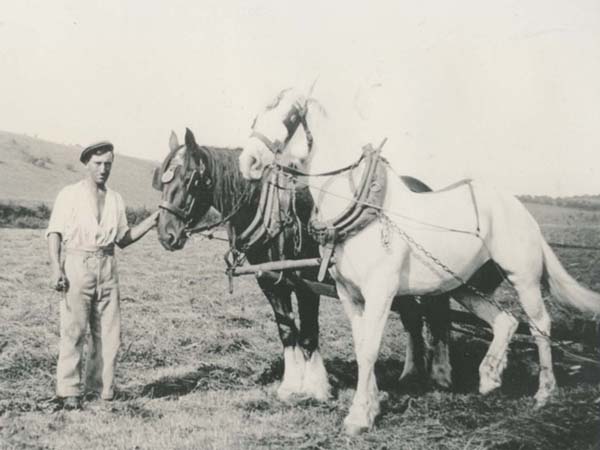
Alfred Charles Jack Whittear with plough horses. He was born in 1903 and worked for Sam Hardy of Lower Farm.
Lady making butter
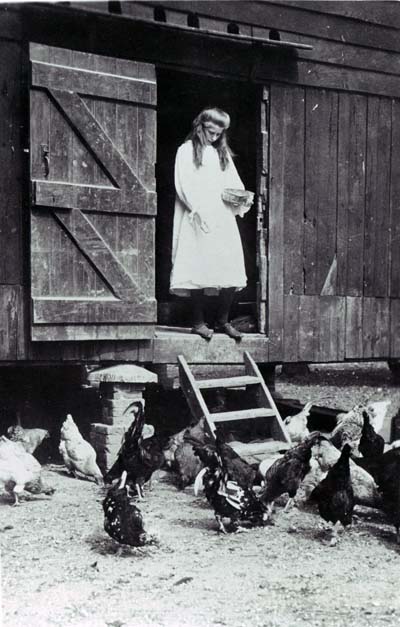
Girl feeding chickens
Walter Whitear, born 1865, shepherd and rabbit catcher
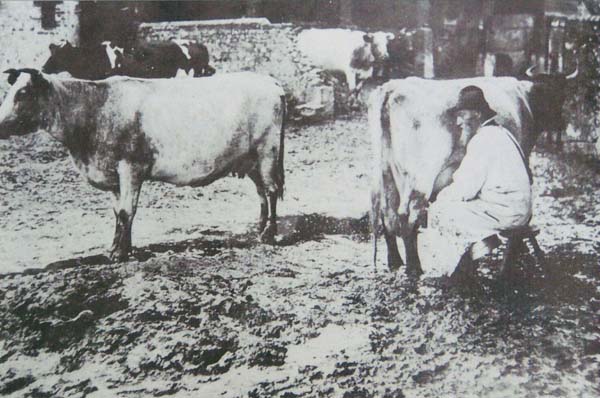
Old man milking cows
Pubs.
Over the centuries, there have been numerous pubs in East Meon, of which the oldest is probably The Angel, in what is now The Cross. It would have been a simple house, in which the owner’s wife would have brewed the beer and clients drank at the kitchen table. Houses named Malthouse and Bottle Cottage suggest that beer would have been brewed locally, and at the start of the twentieth century there were at least four pubs in the village.
Graham & Cheryl Forester outside New Inn
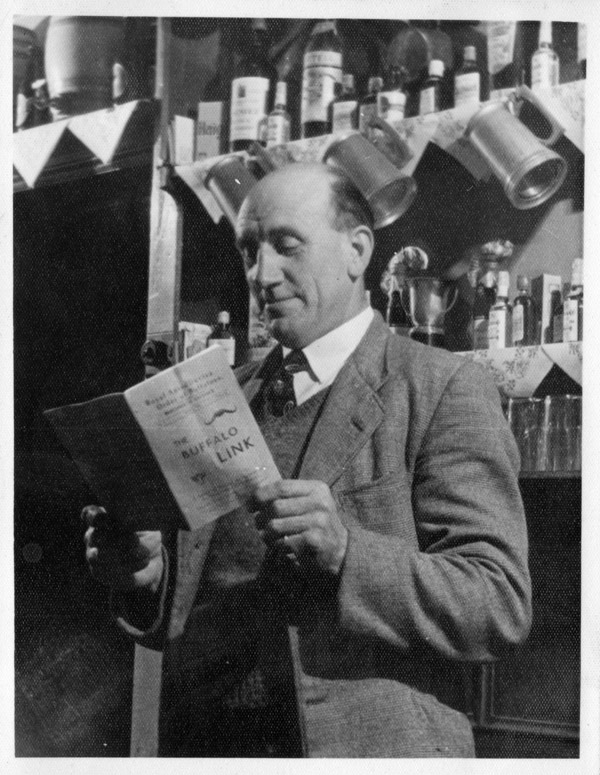
C Parlby was proprietor of The George in 1953 when this photograph was taken.
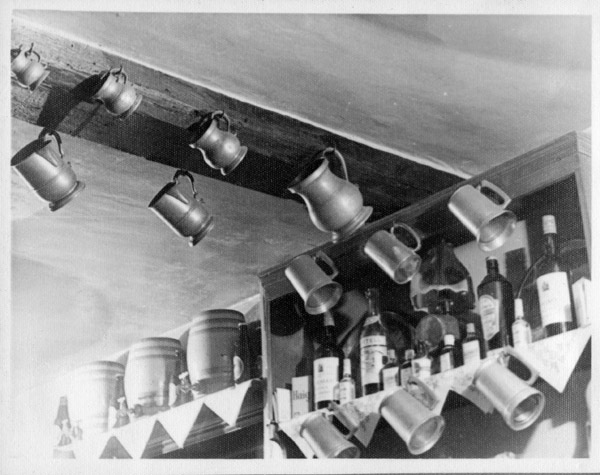
Mugs at the George, 1953
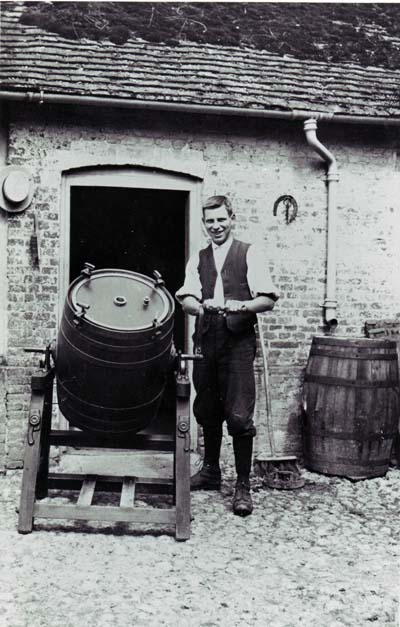
It is not known who this man is, but the number of barrels suggests he is the publican of one of the pubs, probably The George
What is now the Izaak Walton, the other of the two remaining pubs in East Meon, was previously The New Inn.
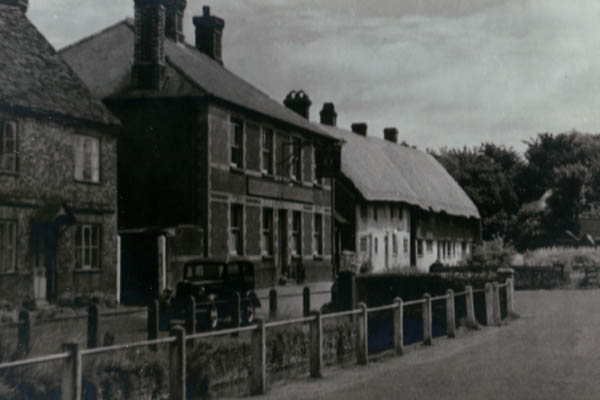
The pub now named Ye Olde George Inn was previously just The George. Its earliest architecture dates back to the seventeenth century, but no coach route ran through East Meon so it was probably never, strictly, an Inn