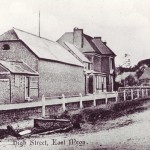
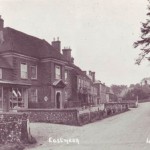
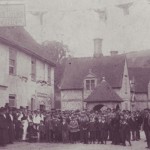
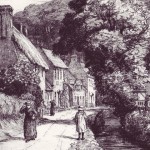
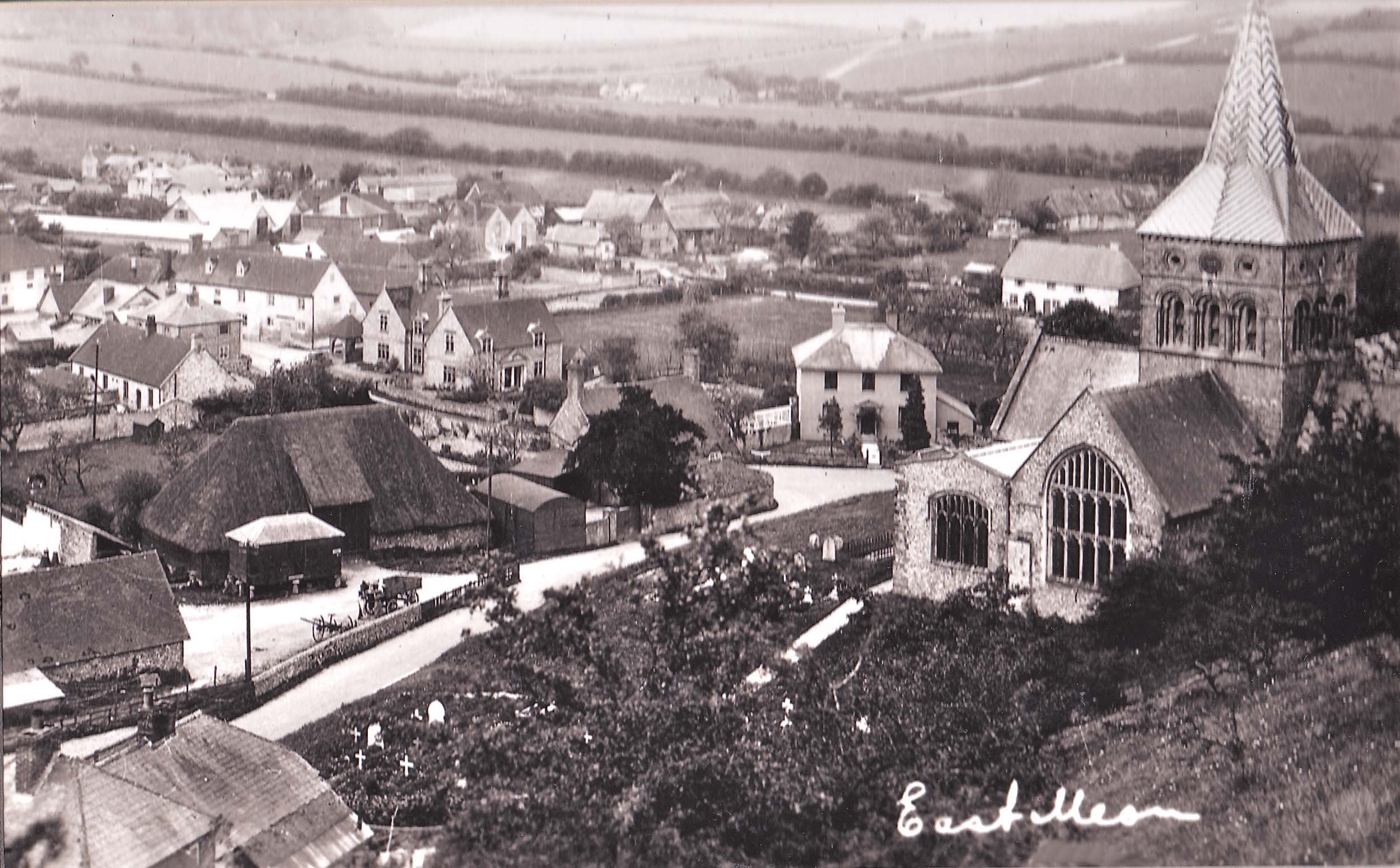
During the Flower Festival, held in late June 2012, members of the History Group led groups around a number of the houses which had been researched for the Historic Buildings exhibition.
Guided walk around the historic buildings of East Meon
A guide book has since been published (£4 at East Meon Village Stores or at Petersfield Museum.)
In the early 20th century, most villagers were unable to travel outside East Meon. With over 20 shops and trades, the village was virtually self-sufficient.
Margery Lambert with her map
Clara Fisher
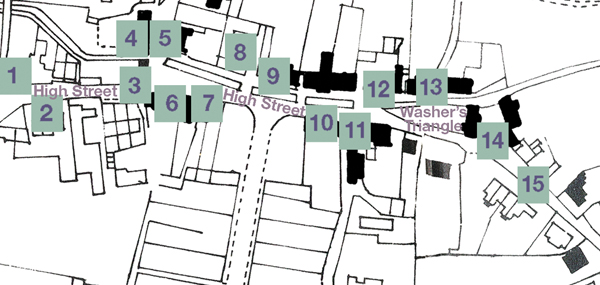
In 2007, retired district nurse Margery Lambert drew a map from her memory of the stores and workshops which had served East Meon in the 1920s. Earlier, another villager, Clara Fisher, had described to village historian Freddie Standfield life in the village as she remembered it between the wars. Together with other personal memories, they provide a vivid picture of a thriving High Street in which almost every building offered goods or services. Today, East Meon has one shop and two pubs.
Provisions
“The village had four bakers, three grocers, a butchers, two mills, wheelwrights, farriers, a post office, and even a fish and chip shop, as well as visits from ‘travelling shops’ selling fish and meat. Clothes, boots and shoes could be bought at one grocery shop (Warrens).” Clara Fisher.
R.Norgett and Sons sold meat from what is now Riverside – serving it from a flap opening onto the street. The butcher slapped down a lump of meat and the trick was to pick it up before the flies settled on it. There were two other butchers, George Aylmore and Samuel Long.
“Warrens, where the Tudor House now is, was the Haberdashery and apart from groceries and household goods, sold fabrics, boots and shoes, as well as locust beans and figs out of sacks on the floor.”
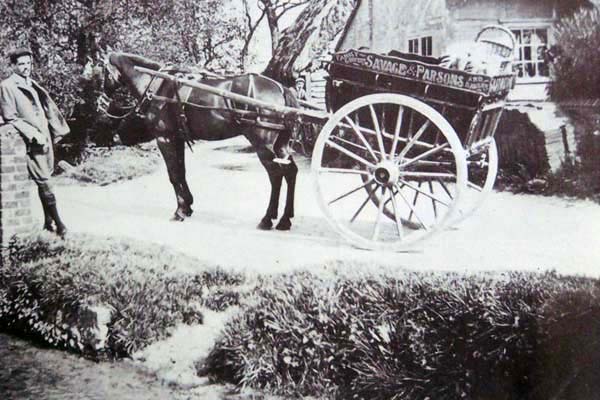
A bill dated 1899 from Thomas Adams, Family Grocer, Baker and Coal MerchantThe store was later Savage & Parsons, whose cart is seen here in Frogmore
In the 1920s it was managed by Stephen John Parsons
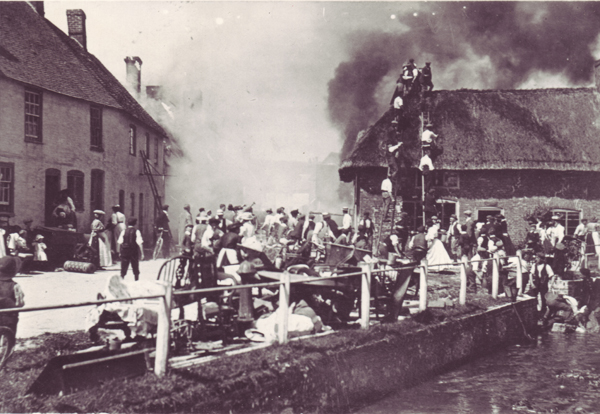
“All Groceries, excepting Smiths at the Post Office, sold Paraffin Oil, a most important requisite for the cottagers who had no electricity.” Margery Lambert. A fire in 1910 destroyed all the buildings – mostly shops – at the western end of the High Street.
Potter’s General Storehouse survived the fire; it was later taken over by HG Pink and then Mr Witt, butcher.
“David Coles was the resident of Glenthorne; the farmyard fielded a dairy. He kept a retail shop at what is now ‘The Gatehouse’ and sold sweets, milk, butter and, when he killed a pig, faggots and offal. He had about six to eight cows that grazed on the present Glenthorne Meadows housing estate.” Clara Fisher.
The Glenthorne Dairy, operated by Coles
Jane Earwaker, born in 1749, was the first to keep a grocer’s shop at
The shop at Glenthorne Hoouse. In the 1840s, John Nathaniel Atkins opened the first village post
office here, in addition to the grocery and a coal delivery business.
“Wet & Dry Fish was available twice weekly from a niche in the wall between Glenthorne shop and the dwelling attached to the Old Post Office. You can see it bricked up in the wall.” Margery Lambert.
The George Inn, dates back to the 16th century, seen here with staff and customers celebrating Queen Victoria’s Golden Jubilee
Bryden engraving of The Cross. The Angel Ale House dates back to the 17th century
The Bell House, half of which was a saddlery, with the ale house next door.
The New Inn, now the Izaak Walton
Over the centuries, there have been three types of ‘pub’. Most common were ‘ale houses’ – private houses where beer was brewed and sold to customers sitting at benches in the proprietor’s living room. Towns and cities had ‘taverns’, larger establishments which served food as well as drink. On coach routes there were ‘inns’, which provided accommodation and food for travelers as well as stabling. East Meon was not on a coaching route but had its fair share of maltsters, small brewers and ale houses, two of which have survived as pubs. There was even a ‘brewery stores’, Crowley & Co Ltd .
The oldest ale houses in East Meon were The George in Church Street, which dates back to the 16h century, and The Angel in The Cross, 17th century. The building survives as Cross Cottages. The Old Bell was next door to a saddlery business. People walked in with the shoes which they wanted mending, often their only pair, and would sit drinking ale in the Bell next door, whilst waiting for their shoes to be mended.
“William Luff, licensee of The George Inn owned a wagonette and dogcart, available for journeys to places like Petersfield and West Meon, especially to meet trains.” Clara Fisher
Transport
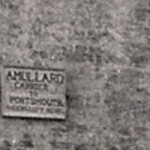
The investiture of the War Memorial in 1923. On a sign above the door of Barnards is a sign ..
which reads: ‘George Mullard carrier to Portsmouth’.
George Noble White, lived at ‘The White Cottage’, High Street and every Tuesday, Thursday and Saturday did the return journey from East Meon to Portsmouth, about 17 miles each way,.
“If full up with goods, White would only carry one passenger, who sat with him on the front seat, open to the elements. In 1921, my sister Dorothy, then 15, travelled to Portsmouth by carrier for a holiday with our aunt. The wagon left at 5.30am, arriving at its destination, the Gosport Ferry, at 12.30. It was a cold October day, and on arriving my sister was so cold and stiff she had difficulty moving.” Clara Fisher.
“The Aburrow family carried on their wheelwrights’ business where East Meon Stores now stands, and at Pond Meadow, the old parish pound. Horse-drawn vehicles were taken there to be repaired or have wheels replaced, and new wagons were built. The family owned a traction engine, used to draw timber from the woods, and when stationary, to operate a belt-driven circular saw.” Clara Fisher.
The Smithy
“The smithy stood, as it still does, at the junction of the High Street and Frogmore Lane, a hive of activity, with many horses queuing up for shoeing. Three or four farriers worked there including Jim Hobbs, the boss. It was thrilling to watch horses being shod, and iron bands put on wagon wheels, with sparks flying from the fire, and more from the anvil, as shoes were hammered into shape.” Clara Fisher
On the left, the Forge c 1909. Master blacksmith Jim Hobbs (fourth from left) is flanked by his sons Donald and Harold. Employee Walter Lambert holds the pony (extreme left) and the little old man, Jimmie Lock, retired and blind, carries a travelling blacksmith’s travelling toolbox. Right, the Forge with Forge Cottage.
In sickness and in death
“The midwife, Mrs Micklam, brought children into the world; Mrs Budd, as the village ‘Layer Out’ together with the help of Pinky Kille or Henry Coles, took care of one at the other end of life.” Margery Lambert
“Granny Fisher at the Coombe end of the village and Granny Luff, in the High Street, kept the community well oiled and ‘potioned’ with herbal advice.” Margery Lambert. In the 1990s, herbalist Tina Stapley lived in the same house, Brook Cottage; she grew herbs in the garden and published books on herbal medicine and cookery.
“There were two Undertakers. Pinky Kille, as he was known, with an unfortunate name for such a profession; he was also the village painter and carpenter. Henry Coles too was an undertaker, and had his coffin- making workshop at Chalk Dell. He laid out the bodies in part of the house known as Cross Keys, down in The Cross, and we would often peep through the cracks in the shutters to see them lying there. Henry Coles made visits to the sick when they were ill.” Margery Lambert.
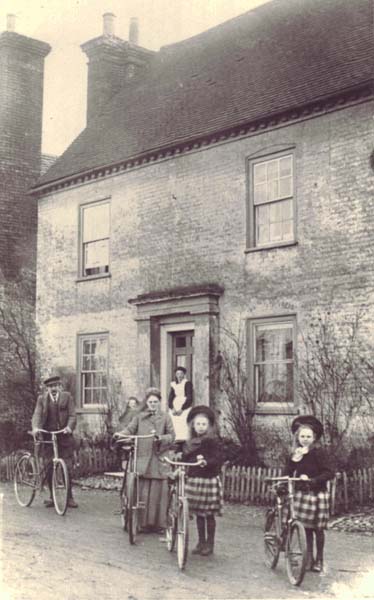
Midwife Kate Micklam with her family photographed in the early 1900s oustide Barnards
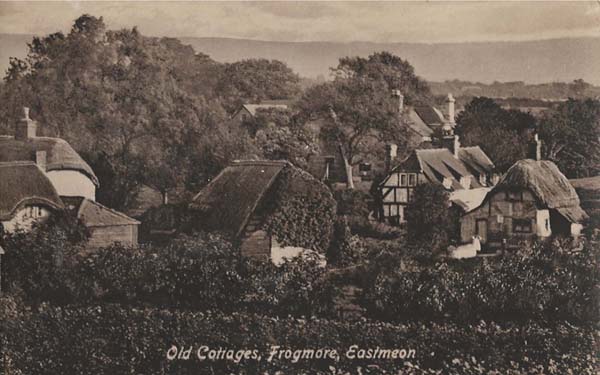
Early 20th century postcard of Frogmore “In the old days, Frogmore was looked upon as something of a slum.” Winifred Hannah Lunt, b 1885, 2 Bottle Ale Cottages.
Frogmore lies at the south-eastern tip of East Meon, a small scattering of cottages and terraced housing alongside the River Meon, adjacent to the grounds of The Court House to the north and of Frogmore Mill to the south. The hamlet mainly housed agricultural and mill workers.
It was a place of water-meadows. They were frequently flooded – considered good for fertility, hay and grazing. An elaborate system of sluices related to the Mill Pond were engineered to manage this opportunity and many of the lease documents of the Mill show this as a financial asset to the estate. The sluices still partially exist.The hamlet of Frogmore today
The Civil War
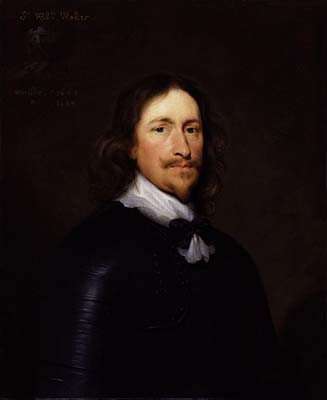
Prior to the Battle of Cheriton, in 1644, the cavalry of the Parliamentary Army was billeted for two nights at Frogmore, including the C-in-C General Sir William Waller’s own regiment. Troop commander Captain Robert Harley wrote…. “Tuesday the 26th the general rendezvous of our Horse was in the field by East Meane”. One of the first war correspondents, Elias Archer, confirmed this was Frogmore and went on to list the cavalry, 4000-5000 in number. They mustered with the infantry and guns next day on “a heath adjoining”. Sir William Waller, who commanded the Commonwealth army whose cavalry camped in Frogmore on the eve of the Battle of Cheriton
Eames Cottages
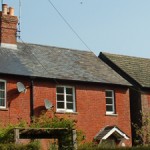
What are now known as Eames Cottages were originally a single Tudor timber-framed cottage which can be dated in the fine books as far back as 1563. It was converted into today’s five dwellings at some point after 1815 by William Eames, a village bricklayer. They would have housed agricultural labourers after the Napoleonic Wars, and provided their landlord with a tidy income. William Eames died in 1845, aged 85, and the cottages passed through successive generations until the end of the century when they were owned by Joseph Eames – and must have picked up their name from one or other of the family. (Research by Phil Gorton for Mark Vernon of No 2 Eames Cottages) Eames Cottages today.
Poverty in mid-19th century
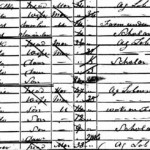
The 1851 census shows that Frogmore was inhabited by agricultural labourers or ‘scholars’, the title given to school-age children.
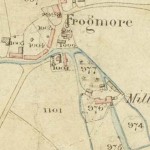
Frogmore shown in the map drawn up as part of the Tithe Apportionments,1852,
Frogmore Mill (below, right) was then owned by John Lillywhite, and included an orchard and some farmland.
No 3 New Cottages
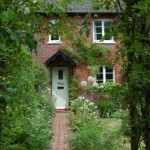
The history of one dwelling in Frogmore provides a glimpse of the social history of the hamlet. In the Tithe Apportionments, James Weeks owned ‘cottages and gardens’, on the site. ‘New Cottages’ were built, slightly closer to the river, at some point after 1885. No 3 was rented by Arthur & George Kille and then by Annie Buncher Wilson. In 1906, William Neighbour, a grocer, bought No 3, and in 1926 another grocer, David Coles, bought numbers 3 & 4 for £350 and rented No 3 to Henry Merritt, another farm labourer, who died in 1944 aged 85.
New Cottages terrace
No 3 New Cottages
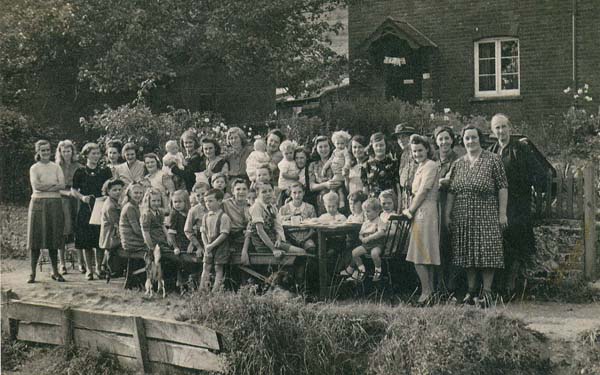
Gwen and Jack Symes, and Jack’s mother Rose, between them rented No 3 from 1950 to 1954. As a Frogmore child (she then lived in No 5 Eames Cottages) Gwen had walked through the field to the National School, but had to leave early to help her mother with the housework and look after her 10 brothers and sisters. She would shop at Parsons shop in the High Street. What is now a car park behind the cottages was then a piggery. As recently as 1950, their toilet was a shed at the bottom of the garden and a tanker lorry appeared twice a week to empty the toilet buckets. The house had two electric light bulbs but no power points – she plugged her iron into the light socket. Celebrating VE Day by the river in Frogmore, 1945
Before the present Village Hall was built in 1974, the social hub of East Meon had been the Parish Institute. Michael Blakstad has researched the minutes of the Management Committee of the Institute and wrote this article for Meon Matters, June 2014.
Before the Village Hall
Today’s Village Hall is a comparatively recent building, opened in January 1975; it plays a vital part in the community life of East Meon, providing a venue for meetings and indoor sports, organised by village societies, and for private social events such as weddings and funeral receptions. The Village Hall Committee works hard to maintain the building and schedule bookings, and to organise the Country Fair each May. But its predecessor was a more vibrant social centre, and demanded more its unpaid Committee.
I have been digging deep into the history of The Institute, the ramshackle building which was located opposite where East Meon Stores now stands. You may have seen the plaque in the foyer of today’s Hall which commemorates the building of the ‘Reading room, Library, Recreation and Coffee room …. legally secured through private beneficence …. in 1887, the year of the Jubilee of Queen Victoria’. It was donated by its benefactors to ‘the Parish of East Meon’, the church not the Parish Council.
The buildings were the cheapest available, mainly corrugated and galvanised iron sheeting. In 1885 it was listed as the ‘Working Men’s Reading Room and Library’, and its Librarian was William S Tregear, then master of the National School. In 1915 it was listed as the ‘East Meon Church Institute’, and ‘Institute’ became the name by which it was known.
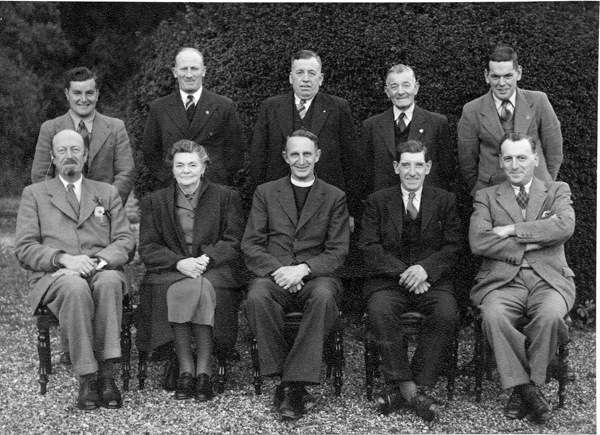
As part of his parish responsibilities, the Vicar of All Saints always chaired the Management Committee, until as recently as May 1968, when the legendary Herbie Goddard was elected to be the first regular lay chairman. Below is a photograph of a Management Committee in the late 1940s, with a commentary by Denys Ryder.
In the days before radio, and long before television, the Institute was a vital source of entertainment and social life in East Meon. In the 19th and early 20th centuries, there was a plethora of village music groups including a fife and drum band, a glee club, jazz and swing bands and a folk group. They all performed at the Institute.
Sports facilities included a billiards table, a boxing ring, and even a rifle range (where Park Vista is now located) all organised by the Committee, who also laid on regular dances. Village societies such as the British Legion also held events (the WI held cookery demonstrations). The National School, located on the West Meon road, used the Library and held overspill classes there. Vicars gave magic lantern shows. In the minutes of January 1931, it is recorded that ‘Mr Talbot Ponsonby was to give a play in aid of Institute funds’.
The rifle range is the long, light roof at the top left of this postcard.
Next to the Institute was the caretaker’s house, and the incumbent was responsible not only for maintenance of the facilities, but for taking bookings, collecting the money and supervising behaviour. Several of the entries in the minutes record damage done ‘by younger members’ at dances and unruly sports events.
The most depressing theme pervading the minutes was the constant need to refurbish and repair the buildings, reflecting the skimpy materials from which they were built.
Group of women and men, probably British Legion, in the old Institute.
Dinner in the Institute, early ’50s
Children’s tea outside the Institute,
By Denys Ryder (from Meon Matters)
Running the Village Hall in the late 1940s was the domain of the men of the Village. Even so, Lady Margaret Nicholson, the last of the Nicholson ‘Gin’ family to live at Bereleigh, (sitting second left) was reported to be a very strong lady in her own right, could get her own way, and saw that the Village Institute & Library, as it was then know, was well run. Other characters were, (from left to right back row), W (Weary) Blackman from Drayton who worked at Bereleigh Estate on the farm side, Herbert (Herby) Goddard ran the garage and petrol pump from the yard of Glenthorne House. Jack Porter was the caretaker and Librarian and worked for the Ministry of Defence at Liphook. He was brother-in-law to Iris Porter. Frank Collyer, leader of the Home Guard and father of Margaret Tosdevine. He was a wood turner by trade. Finally, standing at the end of the row Reece Porter (husband to Iris). He was a Postman and assisted his brother looking after the Village Hall.
Sitting to the right of Lady Margaret Nicholson is Doc. Clifford, who ‘sported’ a ginger goatee beard and had one artificial leg. His surgery was in the Glebe House. The Church was represented by the Reverend Watkins. Harry Wynn was the local contractor who had a lorry and lived at Pidham Farm. He had a wood business and helped maintain the Church Yard. To complete the picture George Wilson Atkinson, father to Wilson and Mary Caines, represented the farming interests, as did his son Wilson for many years in the 1980/90s.
For records of the Institute in the online archive, click here