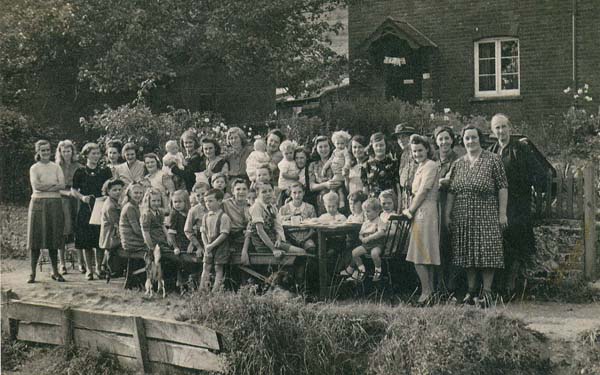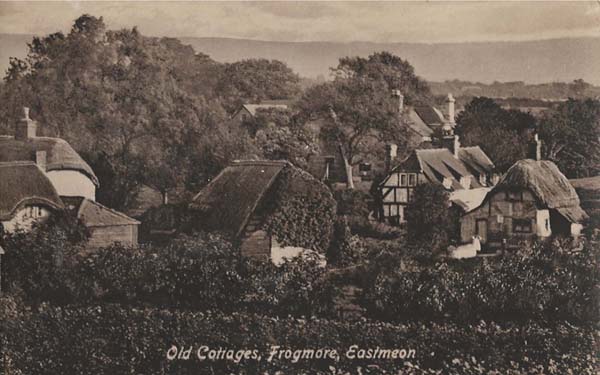
“In the old days, Frogmore was looked upon as something of a slum.” Winifred Hannah Lunt, b 1885, 2 Bottle Ale Cottages.
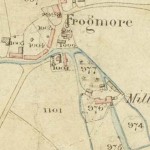
Frogmore lies at the south-eastern tip of East Meon, a small scattering of cottages and terraced housing alongside the River Meon, adjacent to the grounds of The Court House to the north and of Frogmore Mill to the south. The hamlet mainly housed agricultural and mill workers.
It was a place of water-meadows. They were frequently flooded – considered good for fertility, hay and grazing. An elaborate system of sluices related to the Mill Pond were engineered to manage this opportunity and many of the lease documents of the Mill show this as a financial asset to the estate. The sluices still partially exist.
The Civil War
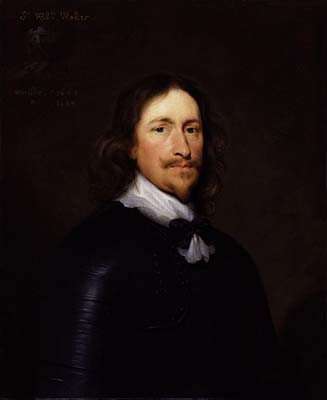
Prior to the Battle of Cheriton, in 1644, the cavalry of the Parliamentary Army was billeted for two nights at Frogmore, including the C-in-C General Sir William Waller’s own regiment. Troop commander Captain Robert Harley wrote…. “Tuesday the 26th the general rendezvous of our Horse was in the field by East Meane”. One of the first war correspondents, Elias Archer, confirmed this was Frogmore and went on to list the cavalry, 4000-5000 in number. They mustered with the infantry and guns next day on “a heath adjoining”.
Eames Cottages
What are now known as Eames Cottages were originally a single Tudor timber-framed cottage which can be dated in the fine books as far back as 1563. It was converted into today’s five dwellings at some point after 1815 by William Eames, a village bricklayer. They would have housed agricultural labourers after the Napoleonic Wars, and provided their landlord with a tidy income. William Eames died in 1845, aged 85, and the cottages passed through successive generations until the end of the century when they were owned by Joseph Eames – and must have picked up their name from one or other of the family. (Research by Phil Gorton for Mark Vernon of No 2 Eames Cottages)

Poverty in mid-19th century

No 3 New Cottages
The history of one dwelling in Frogmore provides a glimpse of the social history of the hamlet. In the Tithe Apportionments, James Weeks owned ‘cottages and gardens’, on the site. ‘New Cottages’ were built, slightly closer to the river, at some point after 1885. No 3 was rented by Arthur & George Kille and then by Annie Buncher Wilson. In 1906, William Neighbour, a grocer, bought No 3, and in 1926 another grocer, David Coles, bought numbers 3 & 4 for £350 and rented No 3 to Henry Merritt, another farm labourer, who died in 1944 aged 85.
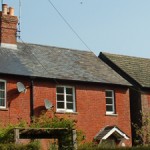
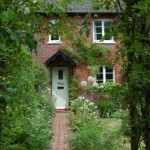
Gwen and Jack Symes, and Jack’s mother Rose, between them rented No 3 from 1950 to 1954. As a Frogmore child (she then lived in No 5 Eames Cottages) Gwen had walked through the field to the National School, but had to leave early to help her mother with the housework and look after her 10 brothers and sisters. She would shop at Parsons shop in the High Street. What is now a car park behind the cottages was then a piggery. As recently as 1950, their toilet was a shed at the bottom of the garden and a tanker lorry appeared twice a week to empty the toilet buckets. The house had two electric light bulbs but no power points – she plugged her iron into the light socket.